
Advanced Rehabilitation Training for Therapists Working in Major Trauma

Comprehensive certification equipping you with the expertise to deliver exceptional, holistic rehabilitation outcomes

Questions? Email us at hello@art-training.co.uk
Dates

TBA

Venue

TBA

Sponsors

Overview

This comprehensive certification programme equips physiotherapists, occupational therapists, and rehabilitation professionals with advanced clinical skills for managing major trauma presentations including soft tissue injuries (degloving and burns), complex orthopaedic injuries (limb reconstruction and fixation), peripheral nerve injuries and traumatic and elective limb loss. Through evidence-based, interprofessional learning, participants will develop confidence in assessment, pain management, movement analysis, and compassionate trauma-informed care.

Who Should Attend

  • Physiotherapists working with complex trauma presentations
  • Occupational therapists in trauma, orthopaedic, or rehabilitation settings
  • Rehabilitation professionals seeking advanced skills in managing multi-system injuries
Duration: 5 full days
Format: Interactive workshops with case studies, live patient demonstrations, and practical skill development
CPD Hours: 35 hours
Accreditation:

Awarded upon completion of attendance, critical analysis essay, and online case study viva

Short on time? Individual modules can be purchased separately.

Questions? Email us at hello@art-training.co.uk

What You'll Learn

Module 1: Major Trauma – 2-day course

Day 1

Morning: Understanding the Common Injuries in Major Trauma

  • Peripheral nerve pain: neurophysiological mechanisms, nerve injury classification, and psychosocial factors
  • Burns and degloving injuries: classification, healing processes, scarring, and surgical interventions
  • Orthopaedic trauma: fracture classification, internal and external fixation, limb salvage procedures, and weight-bearing protocols
  • Traumatic and elective limb loss: mechanisms, levels of amputation, residual limb healing, and post-amputation pain

Afternoon: Comprehensive Assessment

Master the foundational assessment skills for ambitious major trauma rehabilitation

  • Trauma-informed assessment approaches to build therapeutic rapport and psychological safety
  • Comprehensive subjective assessment: pain, function, goals, psychological adjustment
  • Objective assessment protocols: neural assessment, soft tissue, joint integrity, muscle strength, proprioception, balance
  • Movement pattern and gait evaluation
  • Clinical reasoning frameworks for evidence-based treatment planning

Day 2

Morning: Occupational Therapy Assessment and Intervention

  • Occupational performance assessment across all life domains
  • Person-Environment-Occupation (PEO) Model and Canadian Occupational Performance Measure (COPM)
  • Activity analysis identifying physical demands, environmental factors, and overuse risks
  • Adaptive equipment prescription and assistive technology
  • Vocational considerations: return to work, reasonable adjustments under Equality Act 2010
  • Environmental and social barriers to participation

Afternoon: Movement Analysis and Biomechanical Control

  • Normal biomechanics of human movement and gait, and how major trauma alters movement patterns
  • Systematic movement analysis and gait evaluation
  • Lumbopelvic-hip and knee control: muscle slings, force closure, common dysfunctions, progressive exercise programming
  • Scapulohumeral control: shoulder biomechanics, scapular dyskinesis, rotator cuff function, progressive exercise programming
  • Cueing strategies for motor learning

Module 2: Holistic and Compassionate Therapeutic Approach – 2-day course

Day 3

Morning: Understanding Trauma

  • Physiological and psychological trauma response: acute stress, autonomic dysregulation, PTSD spectrum
  • Behavioural adjustment patterns: hypervigilance, avoidance, emotional dysregulation, changes in self-identity
  • How trauma responses impact engagement and participation in rehabilitation
  • Compassionate approaches: trauma-sensitive communication, psychological safety, professional boundaries
  • Self-care and vicarious trauma prevention

Afternoon: Compassionate Rehabilitation

  • Building trust and positive engagement with trauma survivors
  • Graded exposure approaches: fear hierarchies, progressive desensitisation, pacing
  • Holding space for normal responses to an abnormal situation
  • Integrating compassion with clinical rigour and ambitious rehabilitation goals
  • Recognising when professional psychology input is needed and appropriate referral pathways

Day 4: Therapeutic Major Trauma Treatment Toolbox

Morning: Pain Management and Scar Tissue Treatment

  • Peripheral nerve injury management: evidence-based interventions, graded exposure, orthotic prescription
  • Scar tissue management: assessment, massage techniques, silicone and pressure garments, desensitisation
  • Scar contracture management: serial splinting, dynamic splinting, stretching programmes
  • Psychological impact of visible scarring and supporting adaptation

Afternoon: Orthopaedic and Limb Loss Rehabilitation

  • Orthopaedic trauma rehabilitation: fixation-specific timelines, progressive strengthening, complication management
  • Orthotic considerations: functional bracing, offloading, AFOs, weaning protocols
  • Limb reconstruction and salvage: bone grafting, distraction osteogenesis, frame management
  • Prosthetic rehabilitation pathway: pre-prosthetic phase, prescription, training, advanced functional activities
  • Residual limb care, phantom limb pain management, and prosthetic componentry understanding
  • Psychosocial aspects of limb loss: adjustment, body image, social reintegration, peer support

Module 3: Clinical Reasoning and Report Writing – 1-day course

Session 1: Clinical Reasoning

  • Systematic clinical reasoning frameworks integrating all assessment domains
  • Biopsychosocial framework for complex presentations
  • Differential diagnosis: prosthetic vs biomechanical vs psychological factors
  • Evidence-based treatment prioritisation

Session 2: Vision Setting and Goal Development

  • Patient-led vision setting vs therapist-led goal setting
  • Motivational interviewing and person-centred techniques
  • Translating visions into SMART clinical functional goals
  • Addressing barriers to ambitious rehabilitation
  • Interprofessional goal alignment

Session 3: Report Writing

  • Professional report structure for legal and insurance contexts
  • Writing for different audiences: solicitors, insurers, case managers
  • Evidence-based justification of clinical opinions
  • Goal documentation and actionable recommendations
  • Report critique workshop and practical writing exercises

Teaching Methods

Interactive and Practical Throughout:
  • Small group case study work with complex patient scenarios that mirror real clinical practice
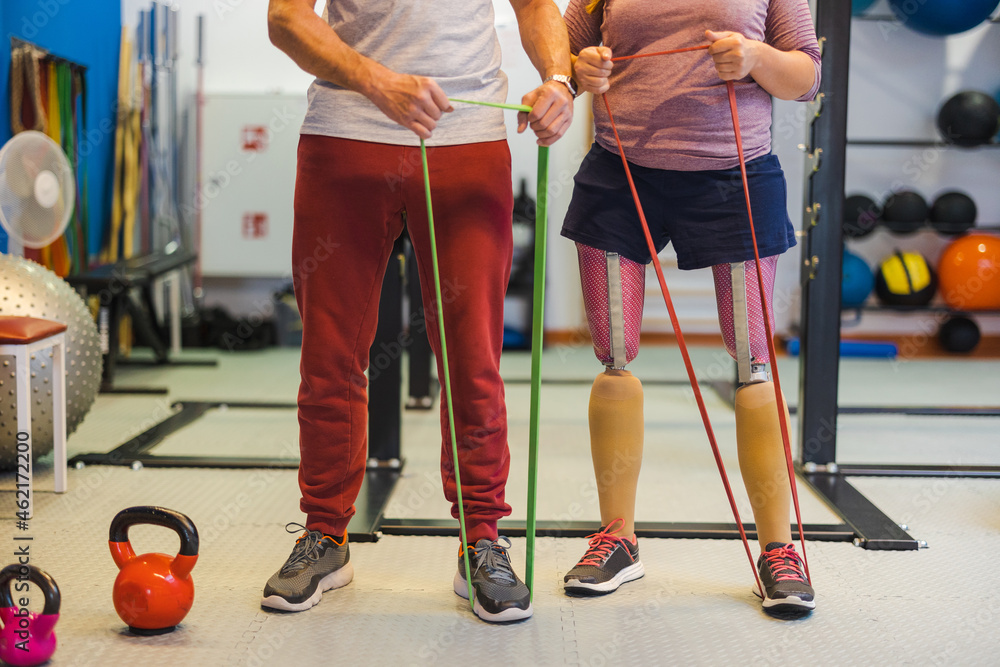
  • Live patient demonstrations with amputee volunteers, allowing you to observe and practice assessment and treatment techniques
  • Hands-on practical skills stations with expert guidance and peer feedback
  • Video gait analysis workshops with frame-by-frame review and clinical reasoning practice
  • Equipment demonstration and prescription workshops - learn to evaluate options objectively across different manufacturers and providers
  • Role-play exercises for vision-setting conversations and complex clinical discussions
  • Report critique and writing exercises with detailed faculty feedback

Upcoming courses

hello@art-training.co.uk
Registered Address: 71-75 Shelton Street, London, WC2H 9JQ
Registered Company Number: 16846478
Be first to hear about our upcoming conferences and courses