
Advanced Rehabilitation Training for Lower Limb Amputee Specialists

Comprehensive certification equipping you with the expertise to deliver exceptional, ambitious rehabilitation outcomes

Questions? Email us at hello@art-training.co.uk
Dates

Module 1 – 24 and 25 June 2026 – Birmingham

Module 2 – 30 September and 1 October 2026 – Birmingham

Module 3 – 18 November 2026 – Birmingham 

Venue

Irwin Mitchell,
The Colmore Building
9th Floor, 20 Colmore Circus
Birmingham, B4 6AH

Sponsors

Overview

Our accredited course provides the comprehensive skillset needed to confidently assess, treat, and advocate for lower limb amputees to enable them to achieve their full potential.

Who Should Attend

  • Physiotherapists working with amputees
  • Occupational therapists in trauma or rehabilitation settings
  • Rehabilitation professionals seeking specialised amputation expertise
Duration: 5 full days
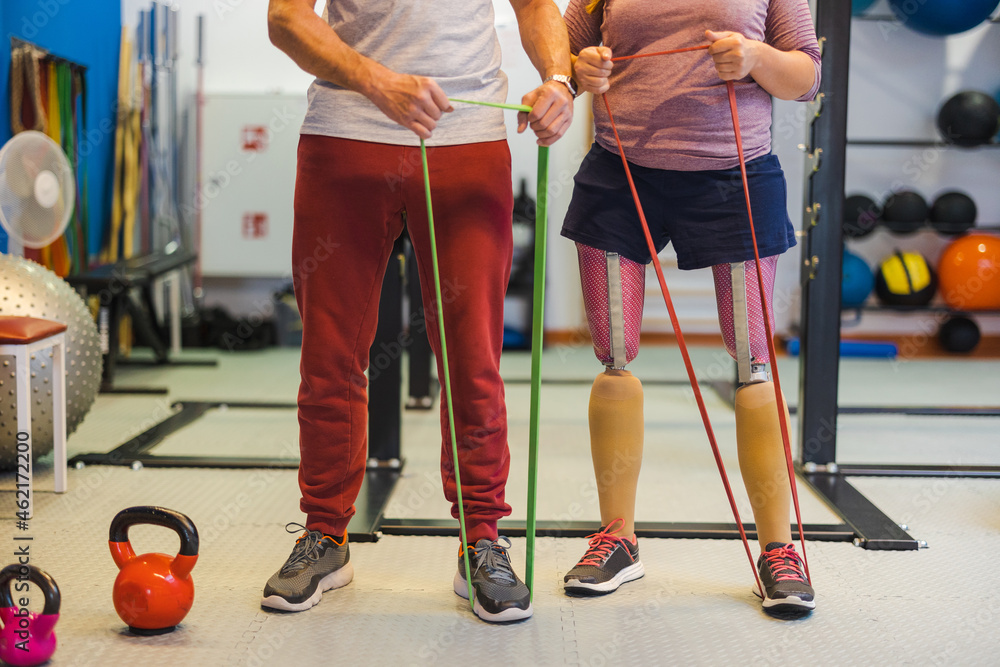
Format: Interactive workshops with case studies, live patient demonstrations, and practical skill development
CPD Hours: 35 hours
Accreditation:

Awarded upon completion of attendance, critical analysis essay, and online case study viva

Short on time? Individual models can be purchased

Our report writing module is open to all clinicians, including case managers, allied healthcare professionals including prosthetists and orthotists. Hone your skills in justifying your recommendations and ensure successful funding

Questions? Email us at hello@art-training.co.uk

What You'll Learn

Module 1: Advanced Assessment Skills

Day 1: Comprehensive Assessment

Master the foundational assessment skills for ambitious amputee rehabilitation

Morning: Core Assessment Framework

  • Trauma-informed assessment approaches building therapeutic rapport
  • Comprehensive subjective assessment: pain, function, goals, psychological adjustment
  • Objective assessment protocol: residual limb examination, joint integrity, muscle strength, proprioception, balance
  • Prosthetic gait overview and alignment evaluation
  • Clinical reasoning frameworks for evidence-based treatment planning

Afternoon: Occupational Performance Analysis

  • Occupational performance assessment across all life domains
  • Person-Environment-Occupation (PEO) Model and Canadian Occupational Performance Measure (COPM)
  • Activity analysis identifying physical demands, environmental factors, and overuse risks
  • Integration of physical and occupational assessment findings
  • Vocational considerations

Day 2: Movement Analysis 

Develop expertise in prosthetic gait analysis and movement control:

Morning: Prosthetic Gait Analysis

  • Normal and prosthetic gait biomechanics
  • Systematic gait assessment identifying deviations and causes
  • Differentiating prosthetic alignment vs socket fit vs patient control issues
  • Prosthetic prescription considerations and prosthetist communication
  • Live patient gait analysis with transfemoral and transtibial volunteers

Afternoon: Lumbopelvic-Hip and Knee Control

  • Normal lumbopelvic-hip and knee biomechanics including muscle slings and force closure
  • Common movement dysfunctions in amputee gait
  • Assessment protocols for hip and knee control
  • Progressive exercise programming from activation to functional activities
  • Cueing strategies for motor learning

Module 2: Building Resilience and Optimising Participation

Day 1:  Amputee Associated Symptoms

Morning: Master evidence-based approaches to post-amputation pain:

  • Current research and neurophysiological mechanisms of phantom limb pain and residual limb pain
  • Comprehensive pain history taking and clinical assessment
  • Biopsychosocial contributing factors: physical, central sensitisation, psychosocial
  • Treatment modalities: myofascial release, electroacupuncture, desensitisation protocols
  • Mindfulness and relaxation techniques
  • Patient education about pain mechanisms

Afternoon: Preventing secondary complications:

  • Biomechanical changes and overuse risk in intact limbs and joints
  • Prehabilitation exercise programs for vulnerable structures
  • Orthotic prescription options and assistive equipment evaluation
  • Activity modification, pacing, and energy conservation
  • Transfer techniques minimising upper limb loading

Day 2: Promoting Engagement & Participation

Morning: Adaptive Equipment and Activity Adaptation

  • Activity analysis identifying overuse risks in self-care and domestic tasks
  • Activity adaptation and modification strategies
  • Equipment prescription: mobility aids, wheelchairs, power add-on devices, self-care and domestic aids
  • Psychological and social considerations: identity adjustment, fatigue management, mental health

Afternoon: Work, Leisure, and Environmental Optimisation

  • Work and productivity: return to work assessment, ergonomics, reasonable adjustments under Equality Act 2010
  • Leisure and social participation: addressing barriers, adaptive equipment, community resources
  • Driving: DVLA requirements, assessment referrals, vehicle adaptations
  • Environmental modifications: home assessments, funding pathways (DFG, charitable funding, NHS services)

Module 3: Clinical Reasoning and Report Writing

Session 1: Clinical Reasoning

  • Systematic clinical reasoning frameworks integrating all assessment domains
  • Biopsychosocial framework for complex presentations
  • Differential diagnosis: prosthetic vs biomechanical vs psychological factors
  • Evidence-based treatment prioritisation

Session 2: Vision Setting and Goal Development

  • Patient-led vision setting vs therapist-led goal setting
  • Motivational interviewing and person-centred techniques
  • Translating visions into SMART clinical functional goals
  • Addressing barriers to ambitious rehabilitation
  • Interprofessional goal alignment

Session 3: Report Writing

  • Professional report structure for legal and insurance contexts
  • Writing for different audiences: solicitors, insurers, case managers
  • Evidence-based justification of clinical opinions
  • Goal documentation and actionable recommendations
  • Report critique workshop and practical writing exercises

Teaching Methods

Interactive and Practical Throughout:
  • Small group case study work with complex patient scenarios that mirror real clinical practice
  • Live patient demonstrations with amputee volunteers, allowing you to observe and practice assessment and treatment techniques
  • Hands-on practical skills stations with expert guidance and peer feedback
  • Video gait analysis workshops with frame-by-frame review and clinical reasoning practice
  • Equipment demonstration and prescription workshops - learn to evaluate options objectively across different manufacturers and providers
  • Role-play exercises for vision-setting conversations and complex clinical discussions
  • Report critique and writing exercises with detailed faculty feedback

Upcoming courses

hello@art-training.co.uk
Registered Address: 71-75 Shelton Street, London, WC2H 9JQ
Registered Company Number: 16846478
Be first to hear about our upcoming conferences and courses